How Exchange Rate APIs Help Global Fintech Build Mobile Banking Apps That Can Grow When Real-Time FX Becomes a Fintech’s Core
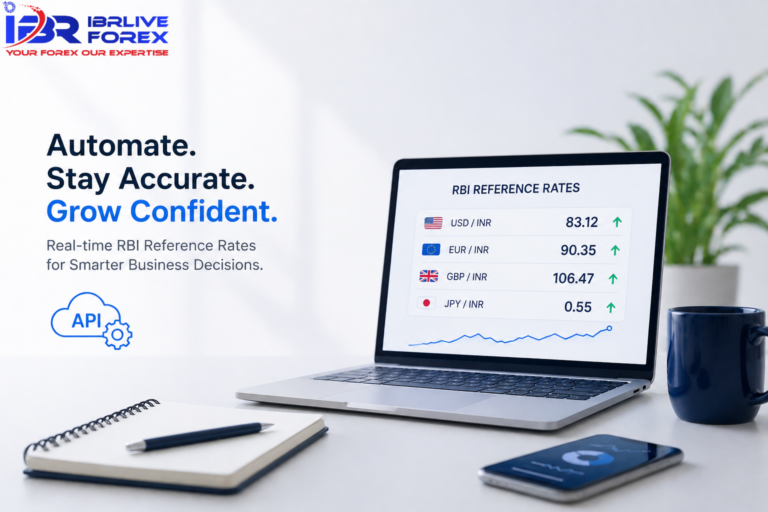
There is a live exchange rate API for fintech in every global finance app, from Revolut to Wise. This real-time data gives you credibility, accuracy, and the potential to grow your business around the world, whether you’re displaying consumers current currency rates, processing payments across borders, or showing a live forex market chart.
People today won’t put up with even a few seconds of delay in rate changes because they can transmit money right away and their wallets work everywhere. In all 150 currencies, they want the same thing: the right amount right now. That’s when APIs like IBRLIVE come into play. They give fintechs the up-to-date currency information that modern banks need.
Why Exchange Rate API For Fintech Matter for Mobile Banking Apps
A mobile banking app without a Real-Time Exchange Rate API For Fintech is like a GPS app without real-time traffic data: it works, but it’s not very useful.
People need to know exactly how much money they’ll get when they send or convert it, not just a vague idea.
This is why APIs are so important:
- Instant Conversion Accuracy: APIs acquire actual FX rates and conversion rate data from global liquidity sources and interbank marketplaces. This means that conversion rates are always accurate.
- Transparency for Users: There are no hidden spreads or old rates, so users can trust the pricing because they are up to current.
- Operational Efficiency: Developers can automate currency conversion logic in the app by using endpoints like /latest? base=USD.
- Compliance and Auditability: APIs keep track of timestamps and rate sources so that regulators can check them.
In short, an Exchange Rate API for Fintech makes it possible for consumers to trust raw market action.
How Real-Time APIs Help the Fintech Industry Grow Around the World
- It’s easy to use cross-border growth – When your fintech enters into new markets, like changing INR to AED or USD to GBP, you don’t have to alter your app totally. You don’t have to adjust the backend code to get exchange rates for all currency pairs automatically with an API.
- Prices that change and quotes that come right away- Imagine someone who wishes to send 10,000 rupees to the UK. If your API gives you the live forex rates, you can give the right GBP and fees straight away, without having to wait or do any arithmetic. This is what makes programs like Payoneer and Remitly so popular.
- Keeping consumers by having charges that are easy to guess- Fintech surveys, including those from the World Bank and Deloitte, show that 70% of users quit if the quote and settlement rates are considerably different. APIs that show real-time foreign currency rates cut down on the churn.
- Automatic support for a lot of currencies- Modern APIs like IBRLIVE make it possible for fintechs to serve more than 150 currencies with just one backend integration. Every time the rates change—live fx rates, forex eur usd live chart, or even forex live chart gold—they are streamed in milliseconds and can easily accommodate more transactions as they come in.
IBRLIVE: The Best Exchange Rate API For Fintech
A lot of worldwide APIs, including OANDA, Currencylayer, and Fixer.io, do a lot of things, but not many are created for the Indian fintech market, where RBI compliance, INR accuracy, and latency are highly critical.
IBRLIVE covers that gap:
- India-Centric Accuracy: Interbank and AD-II data are used to get real-time INR-based feeds.
- Low Latency: Great for banking and financial apps that need to update rates every second.
- Simple to Add: Developers can add functionality to web and mobile applications using REST APIs.
- Compliant Architecture: Follows RBI standards for reporting and openness in FX.
Fintechs can easily grow with IBRLIVE’s currency exchange API because they don’t have to worry about getting the wrong or late INR quotes, which global feeds can’t always guarantee.
Designing for Trust: Making people feel protected by using real-time data
When the value of a currency goes higher, customers usually check to see how reliable a fintech software is. Not “the market,” but you.
What sets the top startups, like Revolut or Niyo, apart from the rest?
- They post real-time currency rate information on the app.
- They enable people to examine live currency charts and updates on the EUR/USD trading pair.
- They use Exchange Rate API For Fintech that update rates every few seconds to make sure that the rate they quote and the rate they really charge are the same.
IBRLIVE’s design lets you stream FX data and convert it on demand. This means that developers can create flexible models, from static quotes for consumers who don’t trade much to tick-level changes for trading or investment services.
Case Example: A Mobile Bank That Functions In More Than One Country
IBRLIVE’s Exchange Rate API For Fintech was just integrated to a mid-sized Indian neobank, which means it can now process transactions in USD, GBP, and AED. Before they worked together, they used a free, slow API that only updated once an hour.
What went wrong? Transfers that were priced incorrectly during times of instability and hundreds of client complaints.
After switching to IBRLIVE’s real-time currency rate API, latency went down by 85%. There were no more problems with conversion, and over the course of three months, user retention increased by 40%.
It’s a simple equation: more data = fewer conflicts = faster progress.
A technical summary of what fintech developers need to know
- Latency under 500ms: For mobile apps that give real-time quotes, latency must be less than 500ms.
- High availability: Keeps live rates consistent even when there is a lot of traffic because it is always available (99.9% uptime).
- Historical endpoints: help with keeping track of analytics and profits and losses
- Secure HTTPS protocol: The secure HTTPS protocol keeps data and money transactions safe.
- Free Sandbox/test API keys: Sandbox/test API keys that are free are ideal for trying out new features.
Many businesses, such as Currencylayer, Fixer.io, and XE, offer free currency conversion APIs for testing. But when you develop, you need APIs that are just as trustworthy as the ones enterprises use. That’s where IBRLIVE comes in, bringing together developer and compliance in one place.
How Live FX Data Helps Products Grow, from API to Strategy
Real-time conversion rate APIs aren’t just for the backend; they also assist spark new ideas at the product level.
- Transparent Cross-Border Pricing: Clear cross-border pricing promotes trust with customers.
- Automated Rate Alerts: Keeps consumers coming back to the app.
- Dynamic Margin Adjustments: Helps fintechs make the most money when things are changing.
- Regulatory Traceability: It’s easier to check for compliance using timestamped rate logs.
When you add up all of these benefits, APIs change from being technical tools to strategic tools that assist global fintech development.
Final Thoughts: APIs as the New Infrastructure Layer
In global fintech, scalability isn’t just about servers or code; it’s also about how quickly and precisely data can be processed.
A good Exchange Rate API For Fintech makes it easy for mobile banking apps to interact with a lot of different countries, currencies, and compliance rules.
IBRLIVE is more than simply another place for Indian fintechs to get data if they want to do business throughout the world. It’s a growth partner that helps you use live FX data to get better prices, establish trust with people, and make your money more clear.
FAQs
Q1. Is it okay to utilize a free currency API in production?
A: Free APIs are great for testing or making prototypes, however they usually only update once an hour. Choose enterprise APIs like IBRLIVE or OANDA for real-time finance operations.
Q2. How often should a mobile banking app update its rates?
A: For live trading or conversions, every 2–5 seconds; for low-frequency informational apps, every minute.
Q3. Why should Indian fintechs choose IBRLIVE?
A: It works best for Indian corridors (INR/USD, INR/AED, INR/GBP) and has updates every second and RBI-compliant reporting, which is an uncommon combination around the world.
Q4. Does adding a forex API make an app run slower?
A: Not if you use caching wisely. For static calls, use server-side caching. For real-time rates, use WebSocket streaming.