
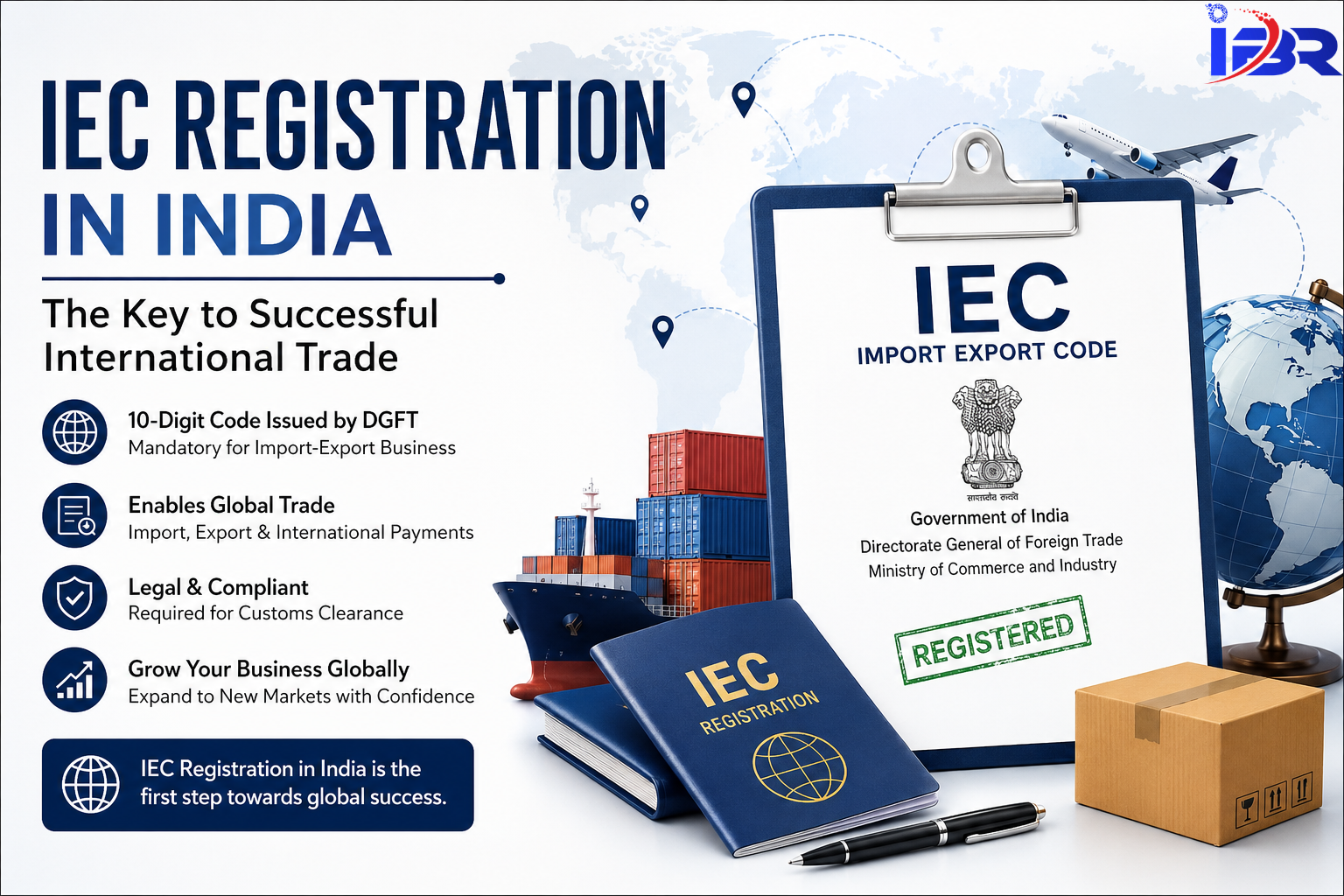
IEC Registration in India: The Key to Successful International Trade
IEC Registration in India is mandatory for businesses involved in import and export activities. Issued by the Directorate General of Foreign Trade, the Import Export Code enables businesses to conduct international trade legally, clear customs shipments, and receive international payments smoothly.
What is an IEC?
An IEC (Import Export Code) is a 10-digit business identification number issued by the Directorate General of Foreign Trade that is mandatory for importing or exporting goods and services from India.
Businesses need an IEC to:
- Clear shipments through customs
- Receive international payments
- Conduct legal international trade
- Expand business globally
Without an IEC, businesses cannot legally participate in import-export activities in India.
Why is IEC Important for Importers and Exporters?
The Import Export Code acts as the foundation of international trade operations. Whether a business imports products, exports goods, or provides services internationally, IEC is essential for compliance and smooth transactions.
Benefits of IEC for Businesses
1. Enables International Trade
IEC allows businesses to import and export products legally from India.
2. Required for Customs Clearance
Indian customs authorities require IEC during shipment processing.
3. Helps Receive International Payments
Exporters need IEC to receive foreign currency payments through banks.
4. Expands Global Business Opportunities
Businesses with IEC can access international markets and customers.
5. No Renewal Requirement
In most cases, IEC remains valid for a lifetime unless surrendered or canceled.
Who Needs an IEC in India?
IEC is required for:
- Importers
- Exporters
- E-commerce exporters
- Manufacturers
- Service providers dealing internationally
- Amazon and online marketplace exporters
- Freelancers receiving international business payments (in some cases)
Is IEC Mandatory for Export and Import?
Yes. IEC is mandatory for most import-export activities in India.
Without IEC:
- Businesses cannot clear shipments
- Banks may not process export-import transactions
- International trade operations become restricted
However, certain government departments and notified exemptions may not require IEC.
Who Issues the IEC in India?
The Import Export Code is issued by the Directorate General of Foreign Trade under the Ministry of Commerce and Industry, Government of India.
The IEC application process is completed online through the DGFT portal.
Documents Required for IEC Registration in India
Businesses generally require the following documents for IEC application:
| Document | Required |
|---|---|
| PAN Card | Yes |
| Aadhaar Card | Yes |
| Business Address Proof | Yes |
| Bank Account Details | Yes |
| Cancelled Cheque / Bank Certificate | Yes |
| Mobile Number & Email ID | Yes |
How to Apply for IEC Registration in India
The process of IEC Registration in India is completed online through the DGFT portal.
Step 1: Visit the DGFT Portal
Access the official DGFT website and create an account.
Step 2: Fill the IEC Application Form
Enter business details such as:
- PAN details
- Business type
- Address
- Bank information
Step 3: Upload Required Documents
Upload all necessary documents for verification.
Step 4: Pay the Application Fee
Complete the online payment process.
Step 5: Receive IEC Certificate
After successful verification, the IEC certificate is issued digitally.
How Long Does IEC Approval Take?
IEC approval is generally processed within 1–7 working days if all documents and details are correct.
Processing time may vary depending on:
- Verification requirements
- Document accuracy
- Application completeness
Common IEC Application Mistakes Businesses Make
Many applications get delayed due to avoidable errors.
Common Mistakes Include:
- Incorrect PAN details
- Wrong bank account information
- Mismatch in address proof
- Incomplete documentation
- Incorrect business category selection
Carefully reviewing the application before submission helps avoid delays.
Why IEC is Important for E-Commerce Exporters
Businesses selling products internationally through platforms like Amazon or other marketplaces often require IEC for export transactions.
IEC helps:
- Receive export payments
- Complete customs formalities
- Ship products internationally
This makes IEC essential for businesses planning to scale globally.
Can Individuals Apply for IEC?
Yes. Individuals involved in international business activities, freelancing, consulting, or exports may apply for IEC depending on the nature of transactions.
Do Service Exporters Need IEC?
Service exporters receiving payments in foreign currency may also require IEC in certain cases, especially when dealing with international clients and banks.
Is IEC Renewal Required?
IEC generally does not require frequent renewal. However, businesses may need to update or confirm IEC details periodically as per DGFT regulations.
What Happens Without IEC?
Without an IEC:
- Import-export shipments may be blocked
- International payments may face issues
- Customs clearance may not be possible
- Businesses cannot legally trade internationally
IEC is therefore a critical requirement for global business operations.
FAQs About IEC
What is the full form of IEC?
IEC stands for Import Export Code.
Is IEC Registration in India mandatory for exporters?
Yes, IEC is mandatory for most export activities in India.
Who issues IEC?
IEC is issued by the Directorate General of Foreign Trade.
Can a freelancer apply for IEC?
Yes, freelancers involved in international transactions may apply depending on business requirements.
Is IEC valid for lifetime?
In most cases, IEC remains valid for lifetime unless canceled or surrendered.
Can I export on Amazon without IEC?
Most international e-commerce export activities require IEC.
How much time does IEC registration take?
IEC approval generally takes between 1–7 working days.
What documents are required for IEC?
PAN card, Aadhaar card, address proof, and bank details are commonly required.
Final Thoughts
IEC Registration in India is one of the most important requirements for businesses planning to expand into global trade. Whether you are an importer, exporter, startup, manufacturer, or online seller, obtaining an IEC is the first step toward successful global trade.
With growing international business opportunities, having the right compliance framework helps businesses expand confidently and operate smoothly across borders.
